How Does an Air Conditioner Work? (Complete Guide for Australian Homes)
A Detailed Explanation on How Air Conditioners Work?
Air conditioning has become an essential part of modern living—especially across Australia, where hot summers, humidity, and extreme temperatures make indoor comfort a priority.
Whether you’re relaxing at home, working in an office, or driving your car, air conditioning systems play a crucial role in maintaining a cool, comfortable environment.
But have you ever wondered how an air conditioner actually works?
Understanding the science and technology behind air conditioning not only satisfies curiosity—it can also help you make smarter decisions about installation, maintenance, energy efficiency, and running costs.
In this comprehensive guide, we’ll break down exactly how air conditioners work, the cooling cycle, key components, different system types, and how to maximise performance and efficiency in Australian conditions.
The Basic Principle: Heat Transfer (Not “Creating Cold Air”)
One of the biggest misconceptions about air conditioning is that it “creates cold air.” In reality, an air conditioner works by removing heat from inside your home and transferring it outside.
This process is based on a fundamental scientific principle called heat transfer.
Key Concept:
- Heat naturally moves from warmer areas to cooler areas
- Air conditioners accelerate and control this process using a refrigerant
Instead of generating cold, your AC system:
- Extracts heat from indoor air
- Moves it outside your home
- Circulates cooler air back inside
This is why air conditioning is often described as a heat removal system, not a cooling generator.
What Is Refrigerant and Why Is It Important?
At the heart of every air conditioning system is a substance called refrigerant.
Refrigerant is a specially designed chemical that:
- Easily changes between liquid and gas states
- Absorbs heat when it evaporates
- Releases heat when it condenses
Why Refrigerant Matters:
- It carries heat from inside your home to the outside
- It allows the system to continuously cycle and maintain temperature
- It enables efficient cooling with minimal energy use
Modern systems in Australia commonly use refrigerants like R32, which are more energy-efficient and environmentally friendly.
Key Components of an Air Conditioner
To fully understand how an air conditioner works, you need to know the main parts that make up the system. Each component plays a vital role in the cooling process.
1. Compressor (Outdoor Unit)
The compressor is often referred to as the “heart” of the air conditioning system.
What it does:
- Compresses the refrigerant gas
- Increases its pressure and temperature
- Pumps refrigerant through the system
Without the compressor, the refrigerant wouldn’t be able to circulate and transfer heat effectively.
2. Condenser Coils (Outdoor Unit)
Located in the outdoor unit, the condenser coils release heat absorbed from inside your home.
What happens here:
- Hot, pressurised refrigerant enters the coils
- Heat is released into the outside air
- Refrigerant cools and turns back into a liquid
This is why the outdoor unit blows out warm air—it’s expelling heat from your home.
3. Expansion Valve
The expansion valve controls the flow of refrigerant into the evaporator.
Its role:
- Reduces pressure of the liquid refrigerant
- Rapidly cools the refrigerant
- Prepares it to absorb heat again
Think of it as a “reset point” that cools the refrigerant before it re-enters your home.
4. Evaporator Coils (Indoor Unit)
The evaporator coils are located inside your home, usually in the indoor unit.
What happens here:
- Warm indoor air passes over the coils
- Refrigerant absorbs heat from the air
- Refrigerant evaporates into a gas
This is where the actual cooling of your indoor air occurs.
5. Fan and Blower System
Fans are responsible for moving air through the system.
- Indoor blower: Circulates air through your home
- Outdoor fan: Helps release heat from the condenser
Without proper airflow, the system cannot cool efficiently.
6. Thermostat
The thermostat acts as the control centre.
It:
- Monitors room temperature
- Signals the system when to turn on or off
- Maintains your desired temperature
Modern smart thermostats can even optimise energy efficiency and reduce electricity bills.
Step-by-Step: How the Air Conditioning Cycle Works
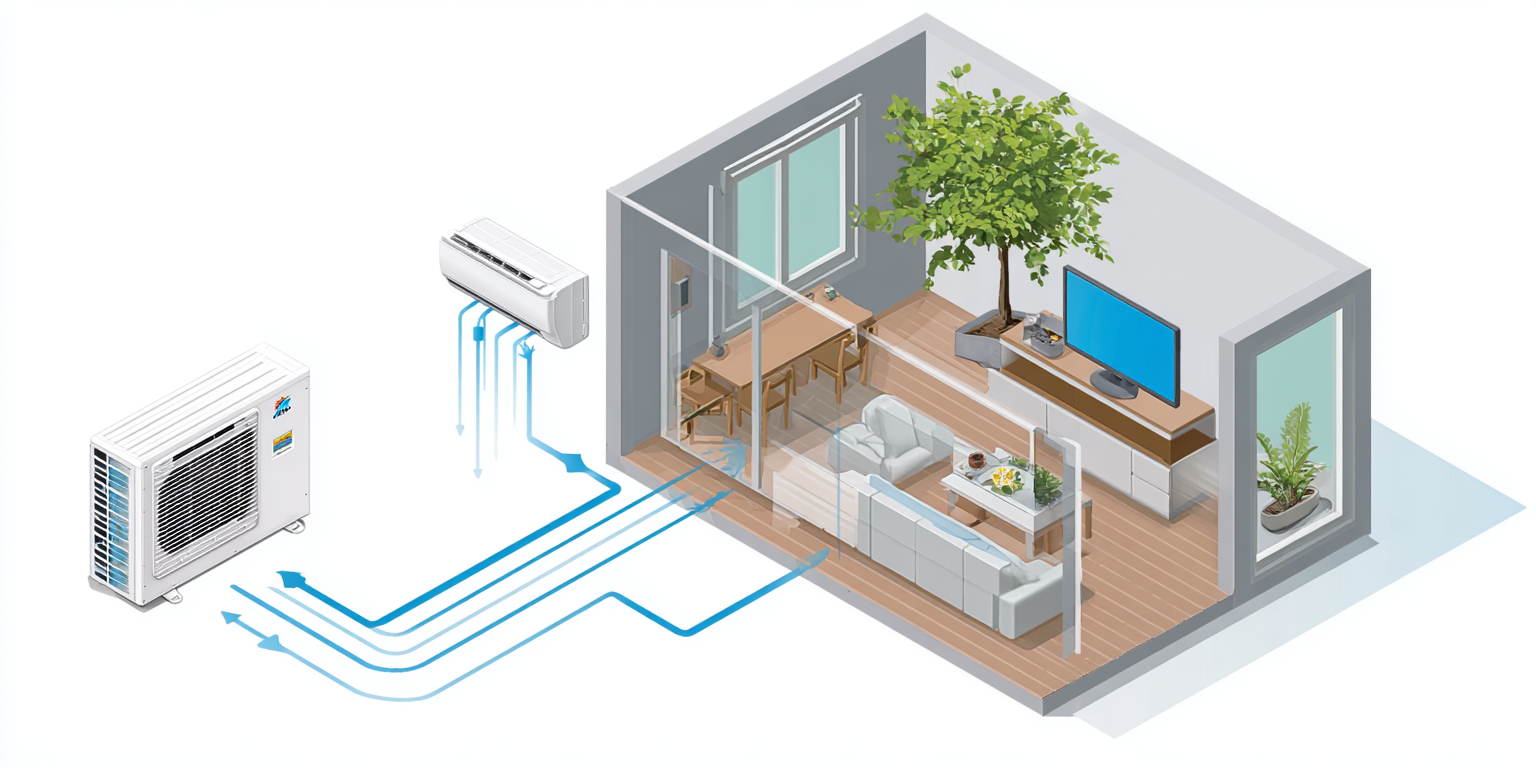
Now that we’ve covered the components, let’s walk through the air conditioning cycle step by step.
This continuous loop is what keeps your home cool.
Step 1: Warm Air Is Drawn Into the System
Your air conditioner pulls warm air from inside your home through return vents.
This air contains:
- Heat
- Humidity
- Dust particles (filtered out by the system)
Step 2: Heat Is Absorbed by the Refrigerant
The warm air passes over the evaporator coils, where the refrigerant absorbs heat.
As this happens:
- Refrigerant changes from liquid → gas
- Air temperature drops
- Cool air is produced
Step 3: Humidity Is Removed (Dehumidification)
During the cooling process:
- Moisture in the air condenses on the evaporator coils
- Water is drained away through a condensate pipe
This is why air conditioners also act as dehumidifiers, making your home feel more comfortable.
Step 4: Refrigerant Moves to the Compressor
The refrigerant (now a warm gas) travels to the compressor.
Here:
- Pressure increases
- Temperature rises significantly
Step 5: Heat Is Released Outside
The hot refrigerant enters the condenser coils in the outdoor unit.
- Outdoor fan blows air over the coils
- Heat is released into the environment
- Refrigerant cools and becomes liquid again
Step 6: Refrigerant Is Cooled and Recycled
The liquid refrigerant passes through the expansion valve, where:
- Pressure drops
- Temperature drops
- Refrigerant becomes cold again
It then returns to the evaporator coils to repeat the cycle.
The Cycle Continues
This loop runs continuously until:
- The thermostat detects the desired temperature
- The system switches off or adjusts output

Why Air Conditioners Also Improve Comfort (Not Just Temperature)
Air conditioning does more than just cool your home—it significantly improves indoor comfort.
Key Benefits:
- Humidity control: Reduces sticky, uncomfortable air
- Air filtration: Removes dust, allergens, and pollutants
- Consistent temperature: Eliminates hot spots
- Improved sleep quality: Cooler environments promote better rest
In humid Australian regions like coastal NSW, dehumidification alone can make a huge difference.
Types of Air Conditioning Systems (Australia)
Different homes and buildings require different air conditioning systems.
All systems use the same basic principles, but vary in design and application.
1. Split System Air Conditioners (Most Popular)
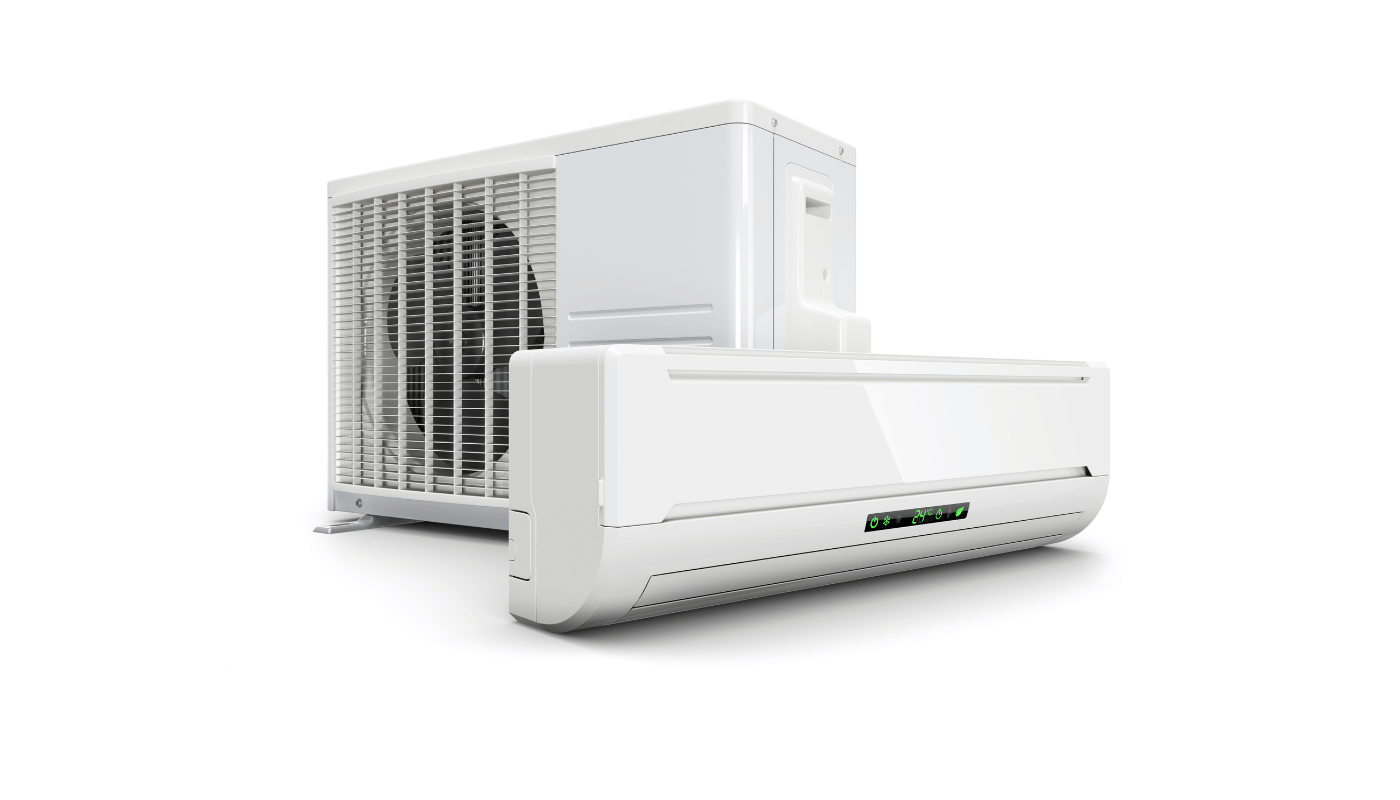
Split systems are the most common choice for Australian homes.
Features:
- Indoor unit + outdoor unit
- Ideal for single rooms or small areas
- Energy-efficient and cost-effective
Best for:
- Bedrooms
- Living rooms
- Apartments
2. Ducted Air Conditioning Systems
Ducted systems provide whole-home cooling.
How they work:
- Central unit distributes air through ducts
- Vents installed in each room
Advantages:
- Even cooling throughout the home
- Discreet design
- Zoned temperature control
Best for:
- Larger homes
- New builds or major renovations
3. Window and Wall Units
These are compact systems with all components in one unit.
Pros:
- Lower upfront cost
- Simple installation
Cons:
- Less efficient
- Noisy
- Limited cooling capacity
4. Portable Air Conditioners
Portable units can be moved between rooms.
Good for:
- Temporary cooling
- Small spaces
Limitations:
- Lower efficiency
- Requires window venting
Reverse Cycle Air Conditioning (Heating + Cooling)
Most modern Australian systems are reverse cycle air conditioners.
This means they can:
- Cool your home in summer
- Heat your home in winter
How it works:
The system reverses the refrigerant flow, allowing it to:
- Extract heat from outside air
- Bring it indoors
This makes reverse cycle systems one of the most energy-efficient heating options in Australia.
Energy Efficiency and Running Costs
Air conditioning can account for a significant portion of your electricity bill—so efficiency matters.
Key Factors That Affect Efficiency:
- System size (must match room size)
- Insulation in your home
- Outdoor temperature
- Thermostat settings
- Maintenance condition
Tips to Reduce Energy Costs:
- Set temperature to 24–26°C in summer
- Use ceiling fans to assist airflow
- Close doors and windows
- Keep filters clean
- Schedule regular servicing
Modern systems with high energy star ratings can dramatically reduce running costs.
Common Air Conditioning Problems (And What Causes Them)
Understanding how your AC works helps identify issues early.
Common Problems:
- Not cooling properly: Dirty filters or low refrigerant
- Strange noises: Loose components or motor issues
- Water leaks: Blocked drain line
- High energy bills: Poor efficiency or outdated system
Regular maintenance is key to avoiding costly repairs.
Why Regular Air Conditioning Servicing Is Essential
Routine servicing ensures your system operates at peak performance.
Benefits of Regular Maintenance:
- Improved efficiency
- Lower energy bills
- Longer system lifespan
- Better air quality
- Reduced risk of breakdowns
What a Professional Service Includes:
- Filter cleaning
- Coil cleaning
- Refrigerant check
- Electrical safety inspection
- Performance testing
For Australian homes, it’s recommended to service your system at least once per year.
How Air Conditioning Impacts the Environment
Air conditioners are essential—but they also impact energy consumption and the environment.
Environmental Considerations:
- Electricity usage contributes to emissions
- Older refrigerants harm the ozone layer
- Poor efficiency increases carbon footprint
Solutions:
- Choose energy-efficient models
- Use solar power where possible
- Upgrade older systems
- Maintain your unit regularly
The Future of Air Conditioning Technology
Air conditioning technology is rapidly evolving.
Emerging Trends:
- Smart AC systems with app control
- AI-driven temperature optimisation
- Solar-powered air conditioning
- Eco-friendly refrigerants
- Zoned and personalised cooling
These advancements are making systems more efficient, sustainable, and user-friendly.
Final Thoughts: How an Air Conditioner Works
Air conditioners work by removing heat from your home and transferring it outside using a continuous refrigerant cycle.
While the process may seem complex, it comes down to a simple, elegant system of:
- Heat absorption
- Compression
- Heat release
- Cooling and recycling
Understanding how your air conditioning system works helps you:
- Use it more efficiently
- Reduce energy costs
- Identify issues early
- Make smarter installation choices
Need Expert Air Conditioning Installation or Service in Newcastle?
If you're looking for air conditioning installation, repairs, or servicing in Newcastle, working with licensed professionals ensures your system is:
- Safe
- Efficient
- Built to last
Whether it’s a split system installation, ducted air conditioning upgrade, or routine service, choosing experienced technicians will maximise comfort and long-term savings.